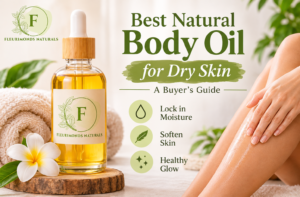
Dry skin often needs more than a quick swipe of lotion. A good body oil seals in moisture, softens rough patches, and leaves skin with a healthy glow. This guide helps you choose the best natural body oil for dry skin by comparing oils, textures, scents, and labels, so you can buy with confidence.
Do You Need a Body Oil?
Body oil works by sealing in moisture rather than adding water. That is why it works best on damp skin, right after bathing. The American Academy of Dermatology advises applying moisturizer while your skin is still damp after a shower or bath, as explained in its dry skin relief tips. If your skin is very dry, an oil can work on its own or over a lotion or butter.
Body Oil, Lotion, and Body Butter Compared
| Product | Texture | Best for | Keep in mind |
| Body oil | Light and slippery | Sealing in moisture, adding glow | Works best on damp skin |
| Lotion | Light, water-based | Daily hydration | May need reapplying |
| Body butter | Thick and rich | Very dry skin and rough spots | Can feel heavy |
In a body oil vs lotion comparison, lotion adds water-based hydration while oil mostly locks it in. For many people with dry skin, using both works best. If your skin needs more richness, read our natural body butter guide.
Best Natural Oils for Dry Skin
| Oil | Feel | Good for | Note |
| Jojoba | Light, absorbs quickly | Normal to dry skin | Technically a liquid wax |
| Sweet almond | Light to medium | All-over dry skin | Avoid with a nut allergy |
| Argan | Silky, medium | Dull, dry areas | Choose pure, unscented versions |
| Sunflower | Light | Everyday dryness | Common in lighter blends |
| Avocado | Rich | Very dry skin | Can feel heavy |
| Squalane | Light, non-greasy | Sensitive or oil-averse skin | Usually plant-derived |
Many shoppers start with a jojoba body oil because it absorbs quickly and rarely feels greasy.
What to Look For
- Minimally processed oils. Cold-pressed or lightly refined oils keep more of their natural character.
- A short ingredient list. Fewer ingredients make it easier to spot anything your skin dislikes.
- A gentle scent or none. Fragrance and essential oils are common irritants, so choose unscented if your skin is sensitive.
- Good packaging. Dark glass bottles and pumps protect oils from light and air, which helps them stay fresh.
- A sensible size. Oils can go rancid over time, so buy an amount you will use within a few months.
How to Read the Label
In the U.S., the FDA has not set a legal definition for the word natural on cosmetics, so always check the ingredient list instead of the front of the bottle. If a label says organic body oil, look for the USDA Organic seal or a clear statement of which ingredients are organic.
Red flags to avoid:
- Natural claims with no ingredient list
- A long fragrance blend with no detail
- Artificial dyes
- Vague claims on an organic body oil with no certification or ingredient information
Match the Oil to Your Skin
- Very dry or flaky skin: Choose richer oils such as avocado or sweet almond, and layer over a butter in winter.
- Dry but dislikes a greasy feel: Try a light jojoba body oil or squalane.
- Sensitive skin: Pick an unscented oil with a short ingredient list, and patch test first.
- Acne-prone back or chest: Choose lighter oils, since some people find heavy oils clog pores.
- Nut allergy: Avoid sweet almond and check every label.
How to Use Body Oil
- Keep showers short and warm, not hot.
- Pat your skin so it stays slightly damp.
- Warm a few drops in your palms and smooth them over your skin.
- Focus on dry spots like shins, elbows, and knees.
- Use after-shower body oil within a few minutes of toweling off for the best results.
Oils can make floors slippery, so be careful when applying near the tub or shower. To build a full routine, pair a scrub, after-shower body oil, and a body butter. Our body care routine guide and best scrub for dry skin can help you get started.
Ready to Shop?
Browse our best-selling natural body care products to compare scrubs, butters, and serums in one place.
Frequently Asked Questions
Is body oil better than lotion for dry skin? Neither is better for everyone. Lotion adds water-based moisture and oil seals it in, so many people use both.
Can I use body oil on my face? Not always. Body oils can be too heavy for the face, especially if you are acne-prone. Use a product made for facial skin.
Can I use body oil every day? Yes, most people can. Start with a small amount and adjust to how your skin feels.
Do natural oils expire? Yes. Oils can go rancid. Store them away from heat and light, and replace them if they smell off.
Should I patch test a new oil? Yes. Test a small area for 24 to 48 hours before using it all over.
Final Thoughts
The best natural body oil for dry skin has a short ingredient list, a texture you enjoy, and a scent your skin tolerates. The body oil vs lotion choice does not have to be either-or: layering the two often gives the best results. Read the label, patch test, and apply on damp skin for the best results.