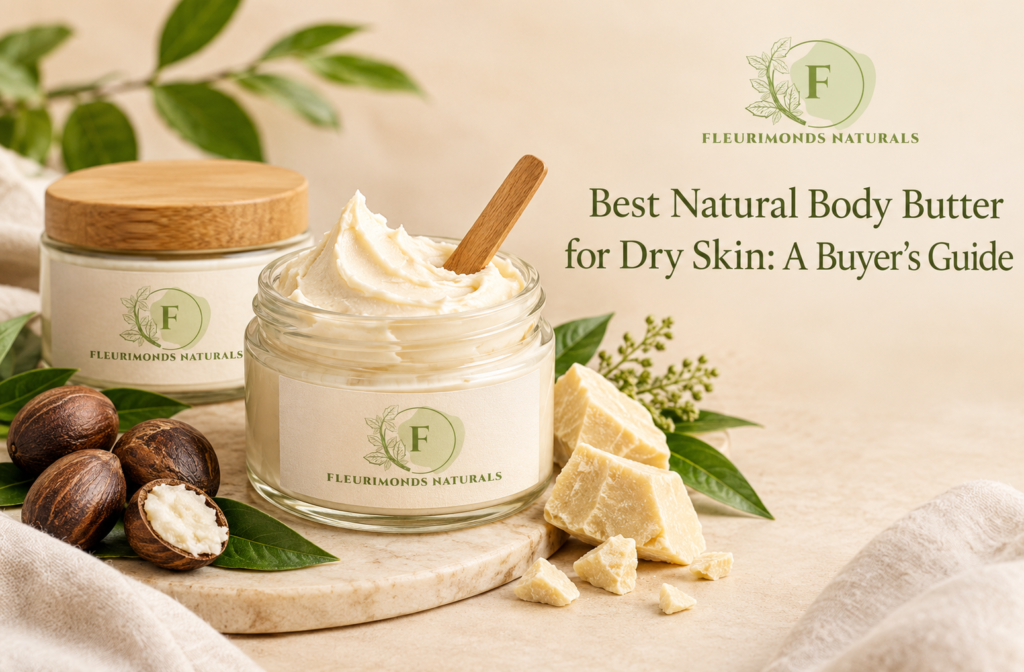
The best natural body butter for dry skin has a rich, butter-based formula, a short ingredient list, and a scent level your skin tolerates. This guide walks through each factor so you can pick a body butter you will actually enjoy using, and avoid paying for ones that disappoints.
Body Butter vs. Body Lotion vs. Body Oil
These three products are often confused, but they behave very differently on dry skin.
| Product | Texture | Best for | Keep in mind |
| Body butter | Thick, rich, often whipped | Dry to very dry skin, winter, rough areas like elbows and heels | Can feel heavy in humid weather |
| Body lotion | Light, water-based | Everyday use on normal to mildly dry skin | May need reapplying through the day |
| Body oil | Light and slippery | Sealing in moisture on damp skin | Gives little hydration on its own |
Dermatologists generally suggest that people with dry skin start with a cream or ointment-type product rather than a thin lotion. The American Academy of Dermatology explains this in its guide on how to pick the right moisturizer for your skin. A body butter sits at the rich end of that range, which is why it suits dry skin so well.
What to Look For in a Natural Body Butter for Dry Skin
1. A butter-based formula
The first ingredients listed should be nourishing butters and oils, such as shea butter, cocoa butter, mango butter, or plant oils like jojoba and sweet almond. These ingredients soften the skin and help slow moisture loss.
2. A short, readable ingredient list
A shorter list makes it easier to spot anything your skin dislikes. If you cannot find the full ingredient list on the product page, treat that as a warning sign before you buy.
3. The right scent level
Fragrance is the most common reason people react to body products. If your skin is sensitive, choose an unscented option. If you want a scent, look for gentle, plant-based aromas such as lavender, and patch test first.
4. A formula that matches how you shop
Water-free butters are dense and long-lasting. Whipped, water-containing butters feel lighter but need preservatives. Neither is automatically better, so choose the texture you will enjoy applying.
5. Sensible packaging and size
A wide jar makes the butter easy to scoop, while a smaller size is a good way to try a new scent before committing to a larger one.
Key Ingredients at a Glance
| Ingredient | What it does | Good to know |
| Shea butter | Softens and seals in moisture | Works well for very dry skin |
| Cocoa butter | Rich barrier for rough patches | Can feel heavy on the face |
| Mango butter | Lighter, smooth feel | A good choice if shea feels too dense |
| Jojoba oil | Lightweight, skin-friendly oil | Absorbs quickly |
| Vitamin E | Helps protect the formula and skin | Often used in small amounts |
Which Body Butter Is Right for You?
You have very dry or flaky skin. Choose a dense, butter-rich formula and apply it twice a day, especially in winter. Pair it with a gentle exfoliant once or twice a week. Our guide to the best scrub for dry skin explains how to exfoliate without stripping your skin.
You have sensitive skin. Pick an unscented body butter with a short ingredient list, and patch test on your inner forearm for 24 to 48 hours first.
You love a scented routine. Look for a body butter with a gentle plant-based fragrance that matches your other body care, such as a lavender butter alongside a lavender scrub.
You are buying a gift. A body butter paired with a scrub and a bar soap makes a thoughtful set. See our tips for building a skin care gift basket.
Red Flags When Shopping for Body Butter
- The word natural with no ingredient list. The term is not tightly regulated, so always read the label. Our post on natural vs. synthetic skin care products explains what to check.
- Vague fragrance listings. A single line reading fragrance does not tell you what is inside.
- Artificial dyes. They add colour but no benefit.
- Very long ingredient lists. More ingredients means more chances of irritation.
- Heavy, greasy residue. A good body butter should absorb within a few minutes.
How to Get the Most From Your Body Butter
- Apply it within a few minutes of showering, while your skin is still slightly damp.
- Warm a small amount between your palms before spreading it. A little goes a long way.
- Focus on the driest areas first: elbows, knees, heels, and shins.
- Be consistent. Dry skin improves with regular use, not a single application.
- Adjust with the seasons. You may want a richer butter in winter and a lighter layer in summer, as covered in our seasonal skin care routine guide.
To see how body butter fits with exfoliating and cleansing, read our body care routine for healthy skin.
Ready to Shop?
If you want to compare options, start with our best-selling natural body care products, which include unscented and lavender body butters alongside scrubs, bar soaps, and body serums. You can also browse all our natural body care collections or view the full shop to build a complete routine.
Frequently Asked Questions
Is body butter better than lotion for dry skin?
For most people with dry skin, yes. Butters are thicker and hold moisture longer than water-based lotions. If your skin is only mildly dry, a lotion may be enough.
Can I use body butter on my face?
It is usually too heavy for the face, particularly if your skin is oily or acne-prone. Use a face moisturizer made for that purpose.
How often should I apply body butter?
Once or twice daily works for most people. Apply it after bathing for the best results.
Is natural body butter safe for sensitive skin?
Often, but natural does not guarantee gentle. Choose an unscented option with a short ingredient list and patch test first.
How long does a jar last?
That depends on size and how often you use it. A small amount per application stretches a jar further than you might expect.
Final Thoughts
The best natural body butter for dry skin is the one with a clear ingredient list, a rich butter base, and a scent your skin tolerates. Read the label, patch test, and match the texture to your climate and routine. When you are ready, our best sellers are a good place to start.